/Sheffield_Logo_Horizontal_Reversed.png)
.png?width=1969&height=1125&name=blog%20banner%20(5).png)
If there were a picture next to the dictionary entry for "Cozy," it would undoubtedly include a fireplace. Does anything conjure up cozy quite like the soft glow of crackling logs in a fireplace? Bring coziness to your basement finish by including a gas or electric fireplace in your plan. With many styles and size options available, you won’t have a hard time finding one to suit both your taste and your budget.
Electric vs. Gas Fireplaces – Which One?
Choosing between a gas or electric fireplace depends on several factors—from aesthetics and performance to budget. Start by defining your goal for the fireplace. Are you primarily adding ambiance, or do you also want it to provide heat? Will you hang artwork or a television above it? And are you looking for a permanent installation, or a more flexible option that can be relocated if needed?
Electric Fireplaces – Pros and Cons
If the idea of an electric fireplace brings to mind outdated designs from decades past, today’s models may surprise you. Modern electric fireplaces use advanced LED flame technology to create the warm, inviting glow of burning embers—without the need for real flames. This makes them an ideal option for finished basements, where you may want the look of a fireplace without adding heat year-round. Many models allow you to adjust flame and ember colors, making it easy to customize the fireplace to complement your finished basement design.
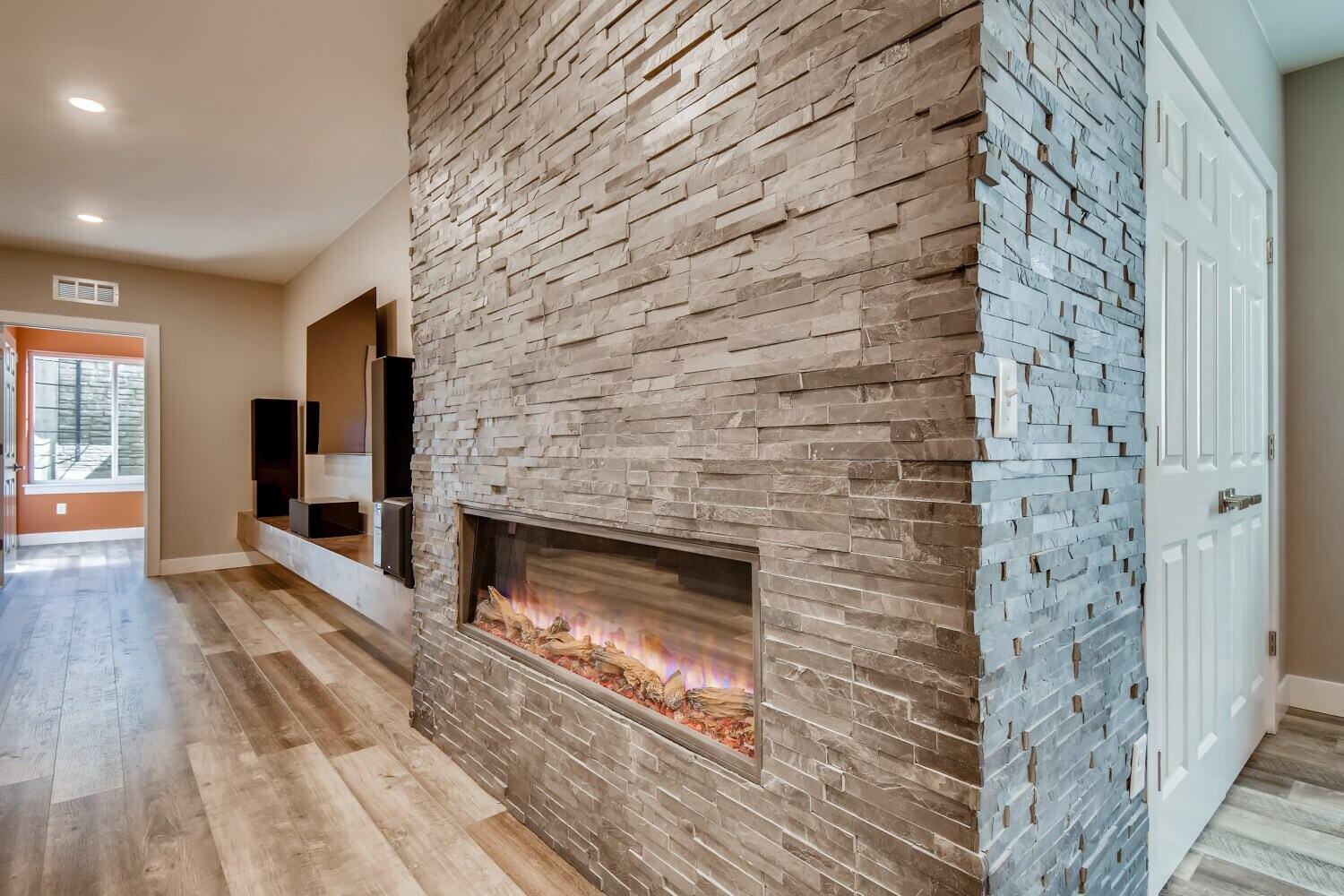
Electric fireplaces may be installed fully-recessed into the wall, as shown above, or may be wall-mounted for a more flexible installation option. If wall-mounted, the fireplace can be easily moved to a different room (or home), provided there is adequate space and an appropriate outlet.
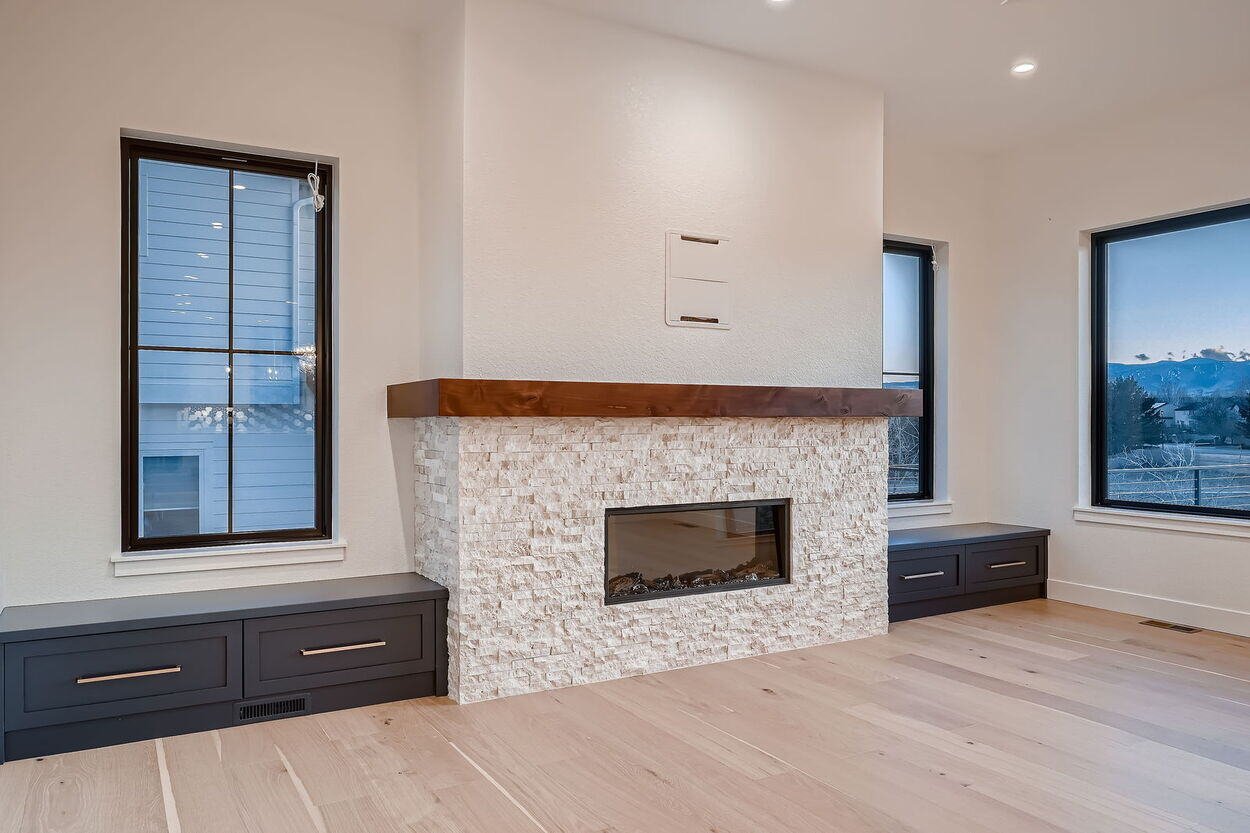
Electric fireplaces require little to no ongoing maintenance because they don’t burn gas and don’t need venting. This makes them a low-maintenance, budget-friendly option for finished basements. They also use less energy than gas fireplaces; however, it’s important to consider overall heating goals. While electric heaters are efficient at the unit level, a gas fireplace may provide enough heat in a finished basement to reduce reliance on your home’s furnace—potentially lowering energy costs while keeping the space comfortably warm.
Gas Fireplaces – Pros and Cons
If budget is a major determining factor in your choice of fireplace for your finished basement, then a gas model may not be your best option, as they are typically more expensive—in some cases, nearly double the cost of an electric model. Unlike electric fireplaces, which are essentially “plug-and-play,” gas models require a gas line to be installed and (in most cases) adequate venting to be built in place.
Gas fireplaces are available with varying venting options. Direct venting draws combustion air from the outdoors and expels exhaust outside of the home via the co-axial flue. It is safe to operate and does not impact indoor air quality. Direct-vent models can be installed in a range of locations, but a power-vent system offers greater design flexibility by allowing installation virtually anywhere in the home. A fan-powered accessory with slim venting can zigzag throughout the home—up, down, over, or under—ensuring safe operation when installed by a licensed professional.
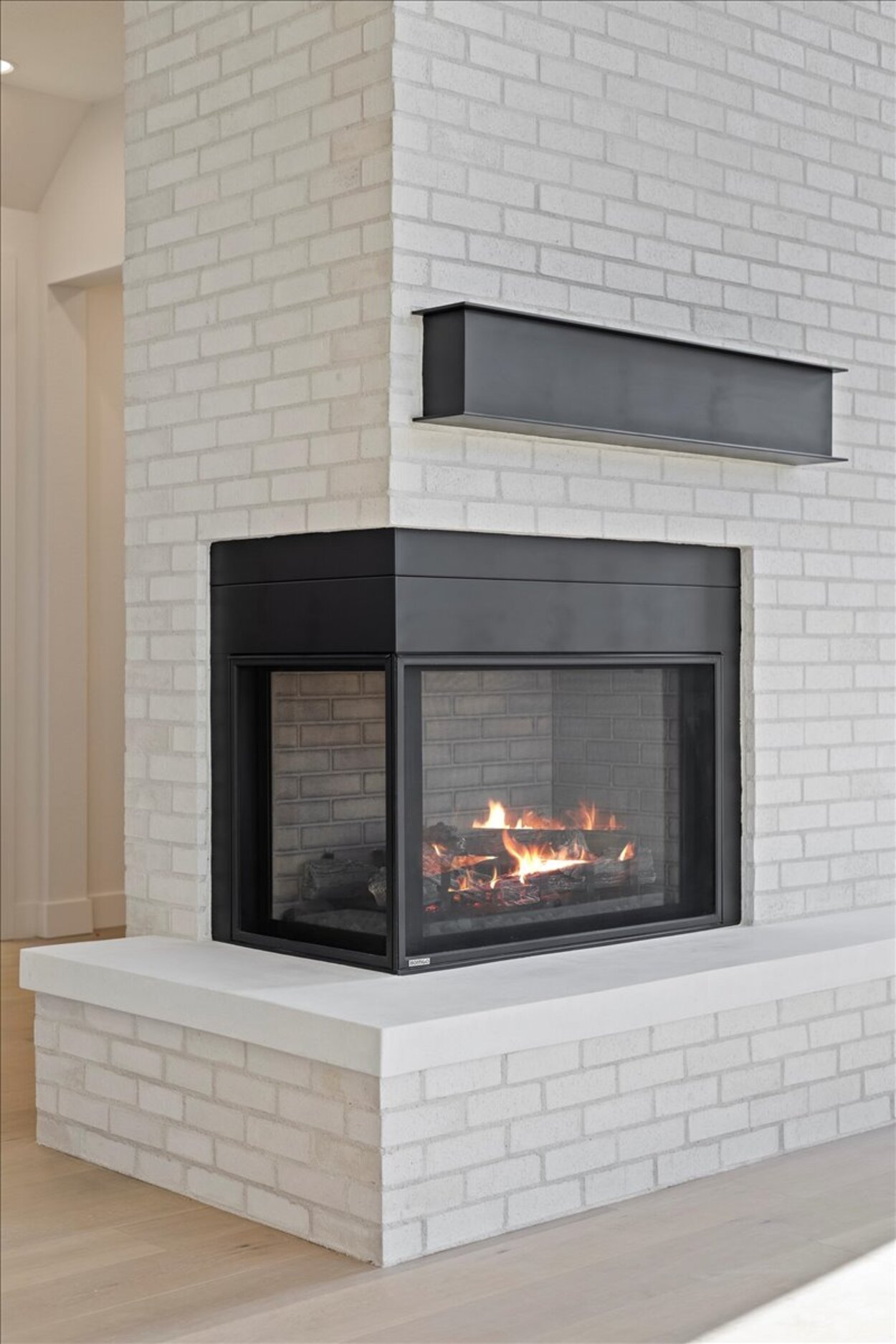
A gas fireplace heats up quickly and generates greater heat in the room than an electric model does. The glass on the front of the fireplace can become hot to the touch, though most newer models are designed with heat barriers such as a double-glass system, which has ceramic on the inside and tempered glass on the outside.
Another key advantage of a gas fireplace in a finished basement becomes clear during a power outage. Because it runs on gas rather than electricity, a gas fireplace can continue to provide warmth while you wait for power to be restored. Gas fireplaces also produce more heat than electric models, which is an important consideration when planning your finished basement layout—especially if you intend to mount artwork or a television above the fireplace. Installing a mantel can help deflect heat away from the wall above, but always consult the manufacturer’s clearance guidelines for the specific fireplace model you select.
Still Undecided?
Whichever type of fireplace you elect to install, you’ll be adding resale value to your home with something you’ll enjoy for years to come. At Sheffield Homes Finished Basements & More, we have experience installing both types of units and can advise you as to which may be the best fit for your situation. We’ve been finishing basements in the greater metro Denver area and in northern Colorado for decades now, and have the skill, expertise, and trade relationships to turn your unfinished space into something remarkable.
Reach Out
Contact us today to see what we can build for you. Your dream basement space awaits!